
Ethereum (ETH) is the world’s leading smart contract blockchain and the second most valuable cryptocurrency: a decentralised platform for building and running applications without intermediaries.
Its native token, Ether, powers the network — used to pay for transactions, staking, and as a store of value. Unlike Bitcoin’s fixed 21 million cap, Ethereum has no hard supply limit but became deflationary after the 2022 Merge to proof-of-stake and ongoing fee burns. Major upgrades like Dencun (2024) slashed layer-2 costs, fueling growth in DeFi, NFTs, and real-world assets. As of early January 2026, Ethereum is trading around $2,900–$3,100 following the post-2025 consolidation — a solid entry point for long-term Ethereum DCA (dollar-cost averaging)

Disclaimer: Not financial advice. Cryptocurrency is highly volatile and you can lose money. Only invest what you can afford to lose. This is my personal experiment.
My Ethereum DCA Experiment
I’ve been running real-world passive income and growth tests here at Mars Money Lab for a while now:
- £40/week into Tesla stock
- Building an ETF dividend portfolio
- Earning cashback with the Plutus rewards card
- Matched betting profits via Outplayed
- £50/month into NS&I Premium Bonds
After recently adding Bitcoin to the experiments with a simple £10 weekly DCA, Ethereum completes the pair perfectly — as the programmable backbone of decentralised finance, NFTs, staking yields, and real-world applications, offering utility and growth potential that complements Bitcoin’s digital gold narrative.
This page follows my simple, low-effort Ethereum DCA experiment: buying £10 of Ethereum every week automatically via Dollar-Cost Averaging (DCA), turning small consistent investments into a growing stack over time. The experiment officially started in late December 2025. I made my first buy of approximately £15 on December 29, 2025, to kick things off. From now on, it will be £10 per week (about £520 per year).
The core strategy is pure DCA: buy the same pound amount every week regardless of price. This removes emotion and lets you accumulate more when prices dip. That said, if we get any significant dips and I have spare cash available, I’ll opportunistically add larger lump-sum buys to take advantage of the lower prices.
I’ll keep the ETH on eToro for the foreseeable future to take advantage of their built-in staking functionality, which automatically stakes my holdings and pays out rewards directly (currently offering ~3% yield with no extra effort, depending on Club tier).
This gives the stack some extra passive growth on top of the weekly DCA while keeping things simple and low-maintenance. Once the total value grows significantly larger, I’ll re-evaluate and may batch-withdraw to my Ledger hardware wallet for full cold storage security — but for now, the convenience and staking rewards make staying on the exchange the better choice.
Keep Your Ethereum Safe with Ledger
Holding Ethereum long-term is great, but keeping it secure is essential, especially as the stack grows larger.
For now, I’m staking directly on eToro for passive rewards, but once the total value gets significantly bigger, I’ll batch-withdraw to my Ledger hardware wallet for ultimate cold storage security. It’s the safest way to protect your digital assets from hacks or platform risks.
Grab a Ledger via my referral link and we both earn Bitcoin rewards:
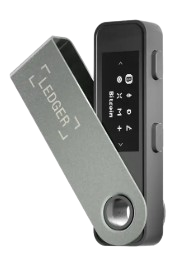
Ledger Nano S Plus: We both get $5 in Bitcoin.
Ledger Nano X: We both get $10 in Bitcoin.
Ledger Stax or Flex: We both get $20 in Bitcoin.
Offers may vary during promotions — check the latest on Ledger’s site.
How It Works
- Sign Up: Use a trusted, FCA-regulated platform (I use eToro).
- Set up automatic weekly £10 purchase of ETH.
- Accumulate over time.
- When ready, transfer in batches to hardware wallet.
Safety / Risk Rating
Ethereum Holding: ★★☆☆☆ (High risk)
Ethereum is highly volatile with typically larger price swings than Bitcoin. Short-term drops of 50%+ are common in bear phases. Returns come from capital appreciation plus staking yields (currently ~3% on eToro, depending on Club tier).
Higher risk than Bitcoin due to greater volatility, no fixed supply cap, technological upgrade dependencies, and competition from other smart contract platforms — despite strong network effects and utility in DeFi, NFTs, and real-world assets. I only invest money I can afford to leave untouched through bear markets.
Pros and Cons
Pros:
- Programmable money: powers DeFi, NFTs, gaming, RWAs.
- Staking yields (currently ~3-5%).
- Deflationary mechanics post-Merge.
- Extremely low maintenance once automated — perfect for Ethereum DCA
Cons:
- Higher complexity than Bitcoin.
- Competition from L1 rivals (Solana, etc.).
- Gas fees on mainnet (though L2s solve this).
- No fixed supply cap.
Try It Yourself

I run both my Tesla stock and this Ethereum DCA experiment on eToro — FCA-regulated, beginner-friendly, supports recurring buys for crypto, and lets you own real Ethereum (with transfers to external wallets).
Once your stack grows, move it to a Ledger hardware wallet for proper long-term security, just like I plan to do.
Latest Updates
Experiment started late December 2025.
Current value: Track live on the Experiments dashboard for real-time portfolio snapshots.
Future updates will include:
- Buy & withdrawal screenshots
- Total invested vs current value
- ETH accumulated & average cost
- Market thoughts
Let’s see where £10 a week takes us in Ethereum. 🚀


